
Most of the buses run by Telangana State Road Transport Organisation are also off the roads

Digital India and Make in India (initiatives) are designed to give special boost to manufacturing and India has huge potential in these areas.

The 30-share BSE gauge climbed 465.14 points or 0.80 per cent to finish at 58,853.07. During the day, it jumped 546.97 points or 0.93 per cent to 58,934.90.
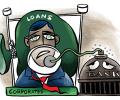
Let all the stakeholders, especially the government, remember that if the Make in India lion needs to roar and rise again, it won't happen unless India Inc rises too, points out Shekaar Subramanian.

The Sensex jumped nearly 900 points and the Nifty rallied over 272 points on Friday, bouncing back from the previous day's fall, following a positive trend in global equities and fresh foreign fund inflows. The BSE Sensex rallied 899.62 points or 1.53 per cent to end at 59,808.97 after starting the trade on a positive note. During the day, it jumped 1,057.69 points or 1.79 per cent to 59,967.04.

The Reserve Bank of India's (RBI's) latest order on unsecured loans is set to hit the banking sector's growth in the near-term, cautioned analysts, as they see banks slowing down on aggressive retail lending. Besides, cost of funds for non-banking finance companies (NBFC) is expected to inch up as banks will pass on higher capital charge to NBFCs. "We believe the fallout of the RBI action will be mainly on growth, given the rising dependence on unsecured retail loans and lending to NBFCs for growth.

Bad loans of PSU banks rose by 28.5 per cent.

Jaitley said that the banks have to play an important role in achieving the higher growth rate.

Mallya claims private airlines were discriminated against by the Indian government, which bailed out state-owned Air India but did not assist his own Kingfisher Airlines and now Jet Airways.

Among the Sensex firms, Axis Bank, Power Grid, Maruti, State Bank of India, Tata Motors, ITC, Nestle and Mahindra & Mahindra were the major gainers. Bajaj Finance and Larsen & Toubro were the laggards.

Since March 2020, when the Nifty50 plummeted to 7,511 following the announcement of a nationwide lockdown, the stock market has been on an upward trajectory. Over the next four years, the major market index has delivered a remarkable compounded annual growth rate (CAGR) of over 31.5 per cent. In the past year alone, the Nifty50 has gained by 27 per cent, hitting a succession of record highs.

There would be no retrenchment of employees and that their services conditions would also not be affected post merger.

Corporate India's net profit as a percentage of gross domestic product (GDP) dipped in the 2022-23 financial year (FY23) -- after rebounding sharply in FY22 -- amid a decline in global commodity prices. Top 500 companies' combined net profit stood at 4.1 per cent of the GDP for FY23, down from 4.3 per cent in the previous financial year when it had gone up from just 3.5 per cent in FY21. "The year-on-year (YoY) decline was led by global commodities, which contributed adversely to the ratio, while the financial sector contributed positively.

Fitch Ratings on Monday said the plan to privatise two state-owned banks in the current financial year ending March 2022 could face delays amid renewed challenges for the Indian banking sector due to the second wave of Covid-19. The government in the Budget announced plans to privatise two public-sector banks. NITI Aayog has been entrusted with the task of selecting the banks and one general insurance company for the privatisation.

Reserve Bank has lowered interest rates by 0.50 per cent since January 2015.
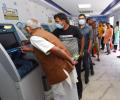
Unlike any other national asset, which is typically sold to the highest bidder, the profile of the bidder is the most important criterion for a licence to bank, and even for acquiring more than 5 per cent stake, explains Tamal Bandyopadhyay.

Traditionally, most PSUs have been cash-rich, which added to their value. However, the government has been tapping regularly into their cash resources to boost revenue for the exchequer

The divestment process, however, will not be an easy affair as there are multiple stakeholders, including the employee unions, whose concerns will have to be addressed.

In the year to date, 61 PSUs have lost an average of 22 per cent, with five companies losing more than half their share value. The BSE PSU index is down 10.6 per cent.

The government is set to initiate consultations with the Reserve Bank of India (RBI) to devise a new security clearance framework for screening potential bidders of public sector banks (PSBs) as it kick-starts the privatisation process, beginning with the strategic divestment of IDBI Bank. As the government is moving ahead with strategic divestment of IDBI Bank and is looking to privatise two PSBs, the Department of Investment and Public Asset Management (DIPAM) is looking to put in place an appropriate framework as the potential buyers will have to meet the RBI's fit and proper criteria, said an official. The process of bank privatisation would be different from the sale of any other public sector undertaking (PSU), and more restrictions and measures will have to be put in place, the official said.

'The CM kept his cool, but his adviser was liberal with filthy language.' Tamal Bandyopadhyay recreates the diary of a general manager in a public sector bank, providing a glimpse of how they balance their work and life.

What the RBI should ensure is that its rules are appropriately framed and uniformly implemented with transparency, fairness and correctness

Customers using e-commerce websites are young and techno-savvy.
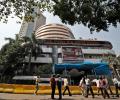
BSE PSU index rallies 10% in one month; nearly a third of the stocks on the index has gained 20% over the period
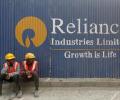
Reliance Industries Ltd was the biggest wealth creator during the five-year period from 2018 to 2023 while Adani Enterprises Ltd was the top all-round wealth creator, according to a study by Motilal Oswal Financial Services. The study, based on stock market performance of companies, said for the fifth time in succession, Reliance emerged as the largest wealth creator, adding Rs 9,63,800 crore wealth over 2018-23. It was followed by Tata Consultancy Services (Rs 6,77,400 crore wealth addition), ICICI Bank (Rs 4,15,500 crore), Infosys (Rs 3,61,800 crore) and Bharti Airtel (Rs 2,80,800 crore).
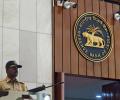
Move can also bring a huge change in the way business is done in India, where firms use multiple current accounts, often for even individual projects, making them difficult to monitor.

The agency said that over the next two years new NPL formation rates would witness a gradual decline.

IndusInd Bank was the top gainer in the Sensex pack, jumping nearly 5 per cent, followed by Bharti Airtel, HCL Tech, Reliance Industries, Titan and Asian Paints.
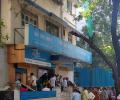
'It is human nature to get angry and annoyed when you are inconvenienced.' 'But we were able to enroll a few of our customers as 'bank mitras', who with my staff made sure that the queues were orderly and coupons were given to all the customers who wanted to withdraw or deposit money.'
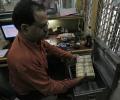
Reserve Bank of India Governor Raghuram Rajan had said recently that there was "no need" to set up a separate bad bank to deal with stressed assets of public sector lenders.

Tata Steel was the top loser in the Sensex pack, plunging over 8 per cent, followed by SBI, Dr Reddy's, Kotak Bank, Sun Pharma, Bajaj Auto and L&T. NSE Nifty declined 118.35 points or 0.71 per cent to 16,450.50.

It is imperative to check the basics of a company before investing in it

India's economy will do well once vaccination reaches a critical mass as pent up demand, global recovery and easy financial conditions will boost activities, RBI's Monetary Policy Committee (MPC) member Ashima Goyal said on Tuesday.

From the Sensex pack, State Bank of India, ICICI Bank, IndusInd Bank, Axis Bank, Kotak Mahindra Bank, HDFC Bank, Reliance Industries were among the major laggards. Bucking the trend, auto stocks Tata Motors and Mahindra & Mahindra closed with gains.

Titan was the top gainer in the Sensex pack, rallying over 5 per cent, followed by Bajaj Auto, Bajaj Finserv, SBI, Nestle India, ITC, Axis Bank and Tata Steel. Nifty rose 46 points to its fresh closing peak of 17,991.95.

Despite unprecedented levels of uncertainty in Samvat 2077, investors have little to complain about on the returns front. The BSE Sensex delivered returns of 38 per cent in this period, while the Nifty registered a return of over 40 per cent. As is the case in bull markets, companies in the small- and mid-capitalisation basket outperformed the benchmarks, with returns almost twice those of frontliners.

Banking services across the country were hit on Wednesday by the day-long strike by 10 central trade unions and 14 bank unions, but workers of largest lender SBI and a few other banks stayed off the agitation.

These firms offer job security and lucrative salries.

Bharti Airtel was the top gainer in the Sensex pack, jumping around 3 per cent, followed by Nestle India, Tata Steel, Bajaj Finserv, HCL Tech and ITC. NSE Nifty rose 15.75 points to settle at 17,369.25.

Major gainers in the Sensex pack were Wipro, Kotak Bank, Infosys, Maruti, Tata Motors, L&T, IndusInd Bank, Hero MotoCorp, M&M, SBI, ONGC, HDFC Bank and HUL, rising up to 3 per cent.
